Your cart (0)
Edgar’s Mission Passport
Compass
Compass
9 October 2026
Sheep
A mother’s love
Forever held by North
Teaching
Certified true likeness

Compass’s story
Compass
Updated October 6, 2026
The recently published account of a humpback whale remaining with her stillborn calf off the Gold Coast is both heartbreaking and important. Scientists were cautious about describing such behaviour as grief, although the researchers documented strong maternal attachment.
We cannot climb inside the mind of a whale and know precisely what she felt. But there were clues written in what she did. Her baby lay on the ocean floor, and the mother whale stayed. She descended to the little body again and again. She touched her baby with her head and pectoral fin. At times she rested beside the calf, eye to eye, maintaining a vigil that lasted for hours.
What struck me most, however, was something that happened only hours after I read her story.
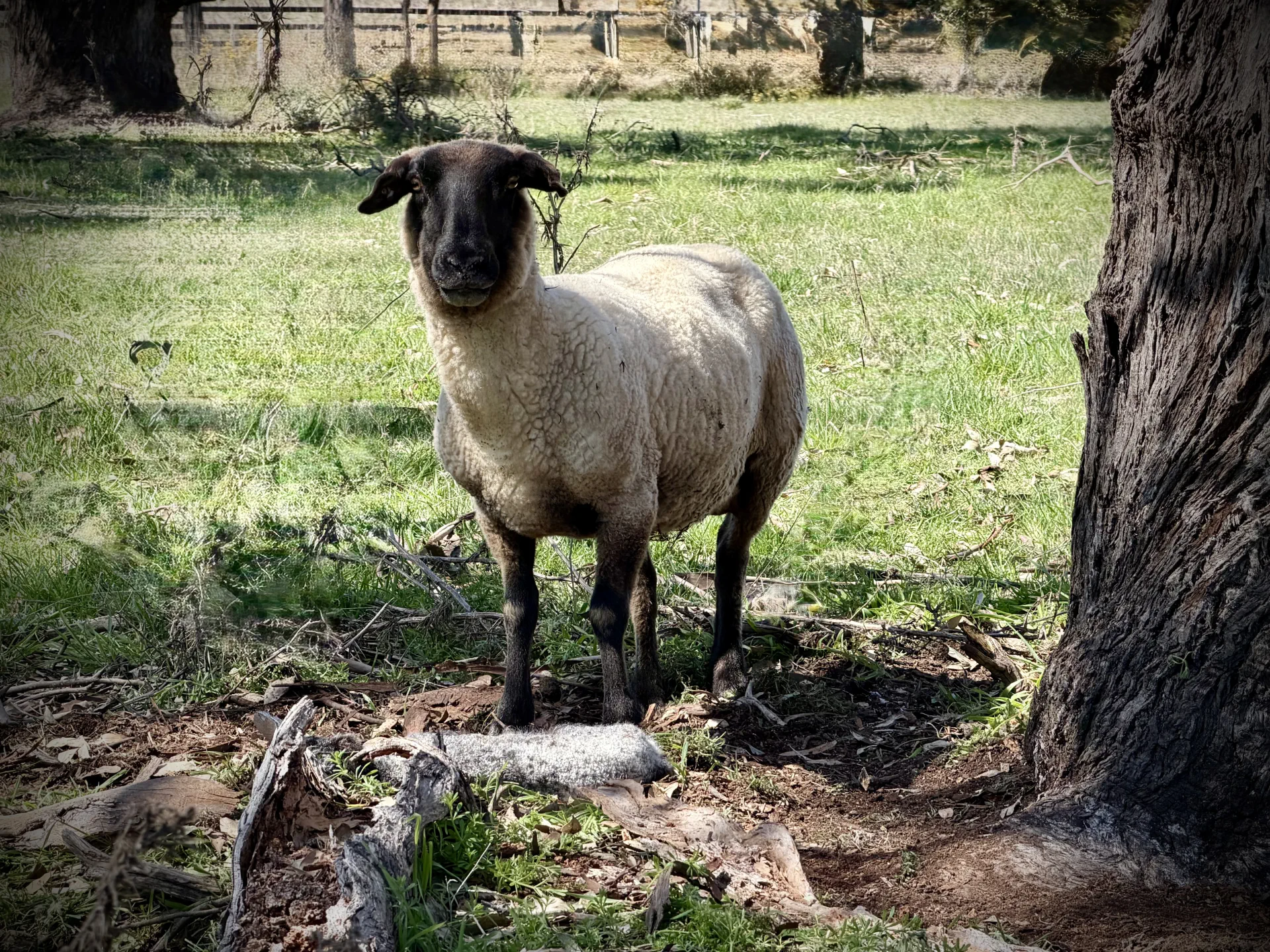
I walked into a paddock to check the eight sheep there, except when I counted, there were only seven. I counted again. Seven curious heads before me, each stationed according to their own comfort with my presence. Mr Penguin, the most social of the group, had assumed pole position as always.
Still seven.
I scanned the paddock again and eventually found the missing sheep, partly obscured behind a tree.
North.
She had been there all along, her eyes trailing my every move. North is one of four sheep who recently found sanctuary with us: North, South, East and West. An older gal who has known many years, yet, it would seem, little reason to trust human hands.
As I moved towards her, she stamped a hoof. She edged away, then stopped. Every part of her seemed to be telling her to flee.
Every part, perhaps, except one.
And then I saw him.
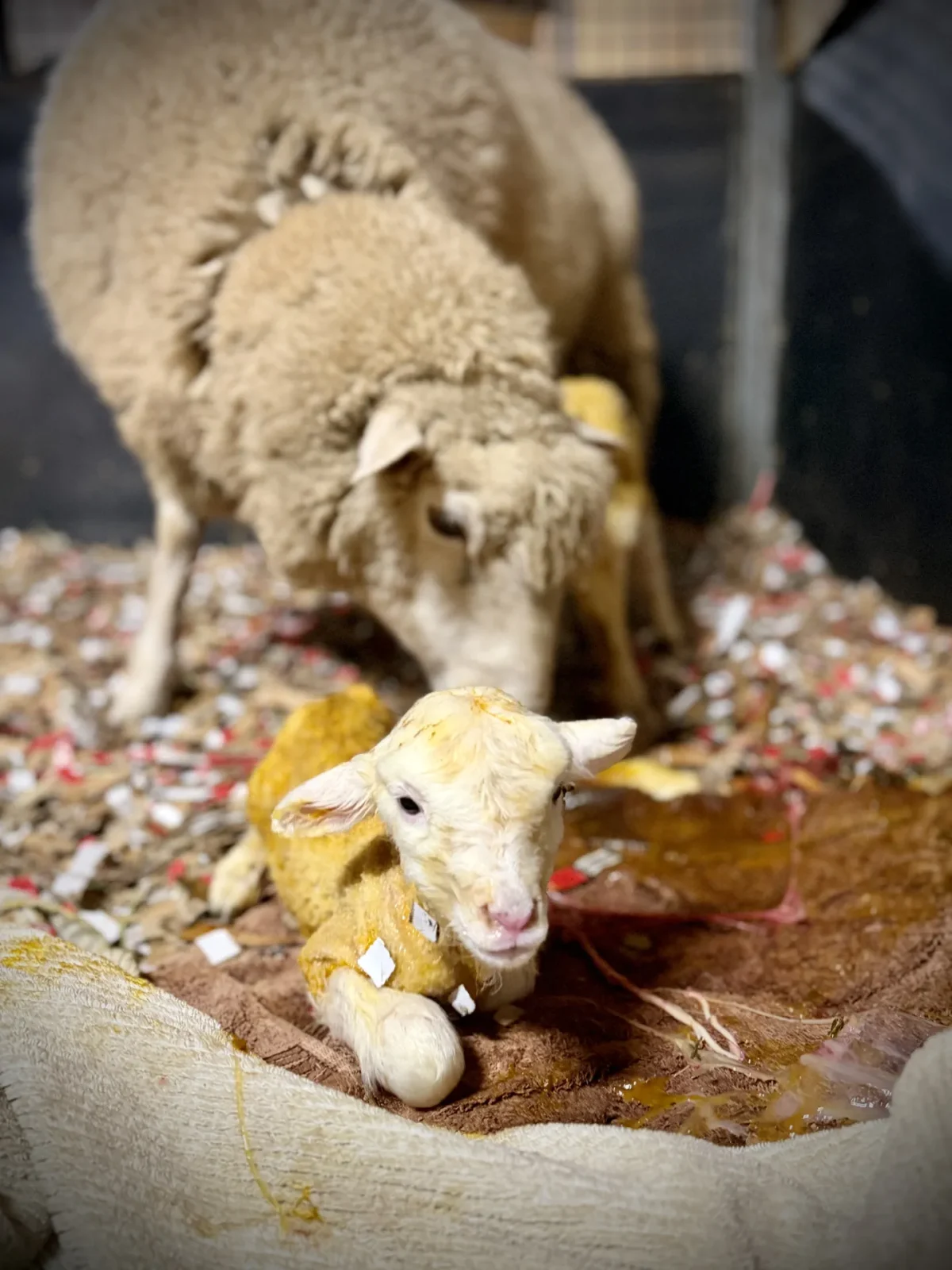
On the ground before her lay a tiny lamb in her image. For one fleeting second came the joy that always accompanies the sight of new life here. But then I moved closer.
He did not move.
North shuffled anxiously, stamping her hoof. Her body seemed pulled in two directions. One towards the safety of distance from me. The other towards that little someone beneath the tree.
And staying always won.
She wanted distance from me, yet would not take it. Because leaving me meant leaving him.
Her baby.
I moved slowly, eventually kneeling beside the tiny body, still holding that foolish little pocket of hope we humans seem to keep for moments such as these.
But he was cold.
His mother had licked him beautifully clean. His little body looked perfectly peaceful, and his tiny feet still wore their soft slippers, untouched by earth. And though he had never taken a breath, his mother had tended him all the same.
I sat back on my heels and North stopped. And together we looked at him. A sheep who had little reason to trust a human and a human desperately wishing she could explain something neither of us could change.
For that fleeting moment, there was nothing to fix. Nothing to treat. Nothing to save.
There was simply a mother. And her baby.
And so I rose and left them.
Whatever North was experiencing belonged to her, and the least I could offer was space in which to experience it. Hours later I returned, and again only seven sheep came to greet me. North had not. She was still where I had left her. Only now she was lying beside her baby.
Evening was beginning to fold itself around the day, and I knew I could not leave his little body there overnight. A fox might find him and, however nature might understand such things, I could not bear for North’s last experience of her baby to be that.
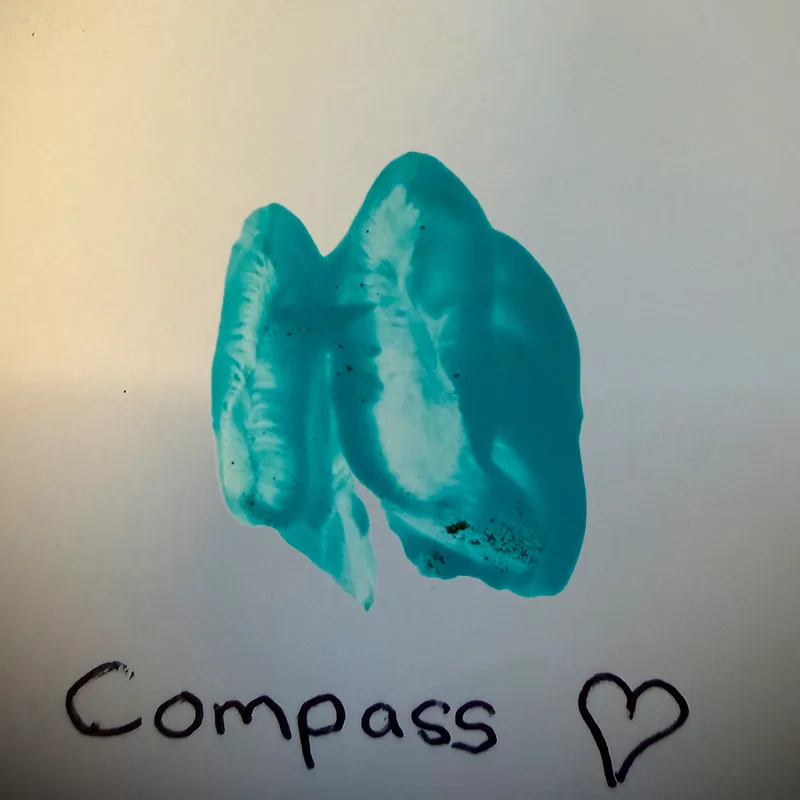
So I approached once more, and North held her ground. Again her body held that impossible argument between fear and attachment. This time I gently lifted her baby, wrapped him in a blanket and gave him a name.
Compass.
And then I carried him away.
Feeling North’s eyes upon my back, I turned and found her looking at the place where her baby had been. Then her soft nicker found my heart.
There are sounds you hear. And there are sounds that enter you. And I think I will carry that one for the rest of my life.
The researchers called what they witnessed in the whale post-mortem attentive behaviour. They were careful with the word grief, as science has a way of doing.
But standing in a paddock with North, I found myself wondering whether sometimes our language becomes more cautious than the lives unfolding before us. A whale descends again and again to the ocean floor. A sheep suppresses every instinct telling her to flee from a human because leaving means abandoning her baby.
One touches her calf, one licks hers. One remains beside a body beneath the sea, one lies beside a body beneath a tree.
Different mothers. Different worlds.
And yet the same terrible absence between them. I cannot tell you exactly what the whale felt. Nor will I presume to tell you precisely what North felt.
But I can tell you what they did.
They stayed.
Perhaps that is where understanding another animal should begin. Not by asking whether her emotions are sufficiently like ours to deserve familiar names, but by paying attention to what she has been showing us all along.
We are readily moved when whales, elephants and other wild animals appear to mourn their young. Their stories cross oceans to reach us. Yet much closer to home are sheep, cows, pigs and goats. Mothers whose babies die. Mothers whose babies disappear. And mothers whose babies are taken from them because the systems we have built require it.
Their losses are more familiar and so vast in number that rarely, if ever, will they enter the scientific record.
But familiarity does not make a loss smaller to the one experiencing it.
Tonight, Compass lies wrapped in a blanket, ready to be returned to the earth. He never followed North across a paddock, nor learned the contours of her voice calling him home. Yet she cleaned him, she guarded him and she stayed beside him.
And when I carried him away, she called.
Perhaps little Compass, whose feet never touched the earth, has nevertheless pointed us somewhere.
Towards the whale beneath the sea, and towards his mumma, North, beneath that tree. And towards the countless mothers whose losses happen beyond our sight or noticing. But no less on our watch.
Maybe the question was never whether animals can grieve.
Maybe the question is whether we are willing to see them when they do.